Why Email Marketing Still Rules in 2026
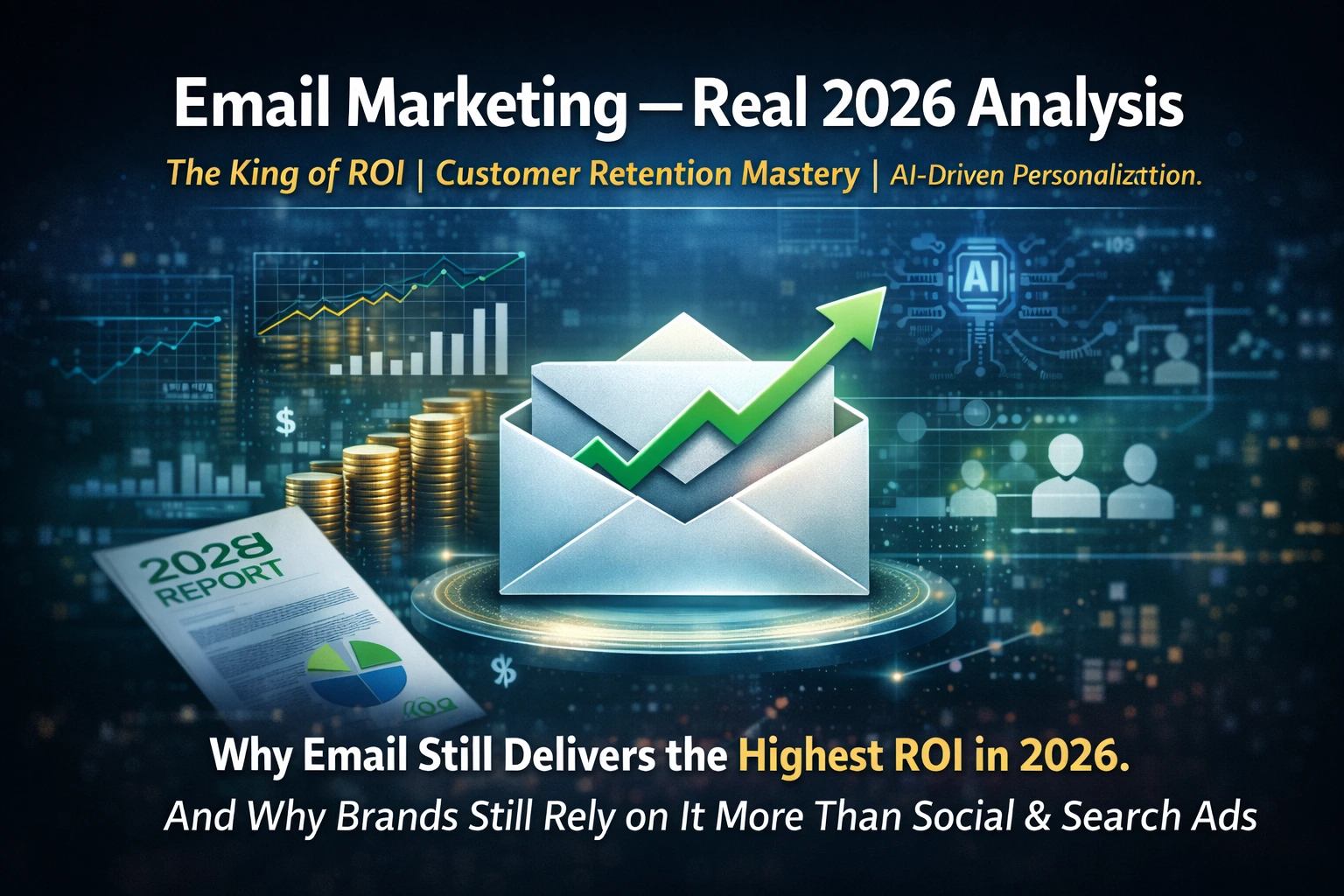
Social media algorithms change every day, and your reach can drop to zero overnight. But your Email List is an asset you own. In 2026, email marketing remains the most personal and profitable way to talk to your audience and make sales on repeat.
1. You Own the Audience
On Instagram or YouTube, you are just a guest. With email, you have a Direct Line to your customers. No algorithm can stand between you and your subscribers.
2. Unbeatable ROI
For every $1 spent, email marketing typically returns $36 to $40. It is the most cost-effective way to nurture leads and turn cold visitors into loyal fans who buy everything you launch.
3. AI-Powered Personalization
2026 is the year of Segmentation. Instead of sending the same email to everyone, we use AI to send the right message to the right person at the exact time they are likely to click.
The Reality of Email Marketing in 2026
Social media algorithms change every day, but the inbox is yours. In 2026, email remains the most reliable way to make sales because you own the connection with your audience. It is not about "spamming"—it is about building a list of people who actually want to hear from you.
1. Ownership of Your Audience
On platforms like Instagram or YouTube, you are a guest. If they ban your account, your audience is gone. With email, you own your data. No one can take your list away from you, making it the safest asset for any business.
2. High Profit (ROI)
Email marketing continues to offer the highest return on investment. Because it is direct and personal, it works perfectly for E-commerce stores, SaaS companies, and digital creators who want to sell products without paying for ads every time.
3. Smart Segmentation
In 2026, we don't send the same email to everyone. We use Segmentation to group people by what they like. Sending a "Men's Shoe" discount only to people who have bought shoes before makes your emails much more effective and less annoying.
4. The Delivery Challenge
The main hurdle today is Deliverability. If you don't follow the rules, your emails go to the Spam folder. You must grow your list honestly and use the right technical settings to make sure you land in the primary inbox.
Where Email Works Best (2026 Use Cases)
Email is a versatile tool, but it truly shines when it is used to guide a person from "just looking" to "loyal customer." Here is how different businesses use email to grow.
1. Ecommerce Stores
The biggest win here is Abandoned Cart Recovery. If someone leaves items in their cart, an automated email can bring them back to finish the purchase. It's also perfect for launching new products and sending "Thank You" notes after a sale.
2. Software (SaaS)
For software, email is all about Onboarding. You can send tips on how to use the app to keep users engaged. It is also the best way to turn a "Free Trial" user into a paying customer by showing them the value of your pro features.
3. Creators & Publishers
If you have a blog or a YouTube channel, a Weekly Newsletter is your best friend. It keeps your audience coming back to your site. You can also use it to sell memberships or promote your own digital courses directly.
4. Agencies & B2B
Agencies use email for Lead Nurturing. Since high-ticket services take time to sell, you can send helpful case studies and "lifecycle" emails to stay in the client's mind until they are ready to sign a contract.
List Growth: Quality Over Quantity
Having 1,000 active subscribers who open every email is better than 10,000 people who never click. In 2026, we focus on Quality Growth—bringing in people who actually care about your business and are ready to buy.
1. High-Value Lead Magnets
Don't just offer a generic "Newsletter." Give people a reason to join. Use Lead Magnets like free checklists, mini-courses, or cheat sheets that solve a specific problem. This proves you are an expert before they even buy from you.
2. Ask, Don't Guess (Zero-Party Data)
Use "Preference Centers" or simple polls when people sign up. Ask them, "What do you want to learn about?" This is called Zero-Party Data. When you send content they actually asked for, your open rates will skyrocket.
3. Progressive Profiling
Don't ask for 10 details at once—it scares people away. Start with just an Email Address. Later, in your second or third email, ask for their name or interest. This "step-by-step" approach builds a detailed profile without being annoying.
4. Multi-Channel Capture
Don't just wait for people to find your website. Use Social Media CTAs (Call-to-Actions) and paid ads to promote your lead magnets. Gating your best content (making it available only for subscribers) is a great way to turn social followers into email leads.
Deliverability: How to Land in the Inbox
If your emails don't reach the inbox, your hard work is wasted. In 2026, mailbox providers (like Gmail and Outlook) are very strict. You need a solid Technical Infrastructure to prove you are a legitimate sender and not a spammer.
1. The "Big Three" Security Settings
Think of SPF, DKIM, and DMARC as your digital ID cards. These settings verify that the email actually came from you. Without them, most servers will automatically send your emails to the Spam folder or block them entirely.
2. Warm-Up Your Domain
Don't send 5,000 emails from a brand-new domain on day one. You must "Warm-up" your IP and domain by starting with small groups of emails and slowly increasing the volume. This builds a positive reputation with Google and Microsoft.
3. Clean the "Stale" Addresses
Sending emails to inactive or "dead" addresses hurts your score. Regularly remove stale addresses and watch out for "spam traps." A clean list means better delivery rates and higher open rates for your active fans.
4. Advanced Tracking (First-Party)
Third-party cookies are dying. In 2026, we use Server-Side Mapping and first-party data. This helps you track exactly which email led to a sale, even if the user has strict privacy settings on their browser.
Automation Funnels & Sequences
Automation is like having a sales team that works 24/7 for free. Instead of sending manual emails, you create Smart Sequences that trigger based on what your users do. Here are the essential flows you need in 2026.
1. The Perfect Welcome Sequence
The first email is your only chance to make a great impression. Use this sequence to deliver your promised lead magnet, set expectations on how often you'll email, and ask them about their preferences so you can send relevant content later.
2. Cart & Browse Recovery
Don't lose money on "almost" customers. Abandonment Flows automatically remind people who looked at a product or left it in their cart. A simple "Did you forget something?" email can recover 15-20% of lost sales.
3. Onboarding & Quick Wins
Especially for SaaS or Courses, use emails to guide users. Give them micro-commitments and "quick wins" (small tasks they can finish easily). If they see results fast, they are much more likely to upgrade to a paid plan.
4. Win-Back & Launch Funnels
If someone stops opening your emails, trigger a Win-Back sequence with a special offer. For new product launches, combine your emails with paid social ads to surround your customer and maximize your reach.
Segmentation & Personalization
Sending the same email to everyone is the fastest way to get marked as spam. In 2026, we use Smart Segments to make sure our messages feel like a 1-on-1 conversation.
1. Watch for Signals
Don't just look at names. Segment your list based on Behavioral Signals—who is opening your links, what products are they clicking on, and when did they last interact? This tells you exactly what they are interested in right now.
2. Lifecycle Stages
A person who just signed up needs a different message than a loyal customer who has bought from you 5 times. Group your audience by their Customer Journey so you can nurture newbies and reward your VIPs.
3. Dynamic Content
Use simple Dynamic Fields (like adding a name) and conditional content. For example, you can show a "Men’s Fashion" banner to one group and a "Women’s Fashion" banner to another within the same email.
4. Keep It Simple
Don't over-complicate things. Prioritize Deliverability. Heavy personalization scripts can sometimes trigger spam filters or make your emails slow to load. Use "Just Enough" data to stay relevant without breaking the email.
How to Monetize Your Email List (2026)
An email list is a digital goldmine. Once you have built a group of loyal subscribers, there are several ways to turn that attention into a sustainable income. Here are the most effective paths in 2026.
1. Direct Product Launches
The most powerful way to make money is by selling your own products. Use Email Launches to build excitement for a new course, ebook, or physical product. Since there are no ad costs, almost every sale is pure profit.
2. Memberships & Subscriptions
Instead of a one-time sale, focus on recurring income. Use automated Retention Campaigns to keep your members happy and engaged. Reminding them of the value they get every month ensures they stay subscribed longer.
3. Affiliate & Partner Offers
You don't always need your own product. Promote Targeted Affiliate Tools or partner services that your audience actually needs. Just make sure to disclose that it's a partnership to maintain the trust of your list.
4. Paid Tiers & Upgrades
In 2026, the "Premium Newsletter" model is huge. Offer your best insights, templates, or deep-dives behind a Paid Content Upgrade. People are happy to pay for high-quality information that saves them time.
The Best Email Marketing Tools for 2026
Choosing the right tool is half the battle. You need a platform that is easy to use but powerful enough to handle your growth. Here is our 2026 curated list of tools for every stage.
1. Sending & Automation (ESP)
For creators, ConvertKit or MailerLite are the best choices. If you run a shop, Klaviyo is the king of e-commerce data. If you are looking for an all-in-one business tool, Brevo offers great value for money.
2. Technical Delivery Systems
If you are building your own app or need massive scale, use Postmark or Amazon SES. These are "transactional" services designed to make sure your emails land in the inbox instantly with 99% reliability.
3. List Building Forms
To capture emails, use ConvertBox for smart on-site popups. For beautiful surveys and research, Typeform or Paperform are unbeatable. They make the sign-up process feel like a fun conversation.
4. Advanced Tracking
Don't fly blind. Use Google Analytics to see what people do after clicking your email. For deep insights into user behavior, tools like CustomerLabs or Heap help you see exactly how subscribers navigate your site.
The Advantages of Email Marketing
Email remains the "Gold Standard" of digital marketing for several reasons. It gives you control that no other platform can offer.
1. High & Predictable Revenue
Email marketing offers a High ROI (Return on Investment). Because you aren't paying for every "view" like an ad, your revenue becomes much more predictable. When you need to make sales, you just send an email to people who already know you.
2. Owned Audience (No Algorithms)
The biggest pro is that you have an Owned Audience. You are not algorithm-dependent. If Facebook or Instagram changes their rules tomorrow, your reach won't drop because you have a direct line to your subscribers' inboxes.
3. Deep Personalization
Email has Strong Automation capabilities. You can set up systems that send personalized messages to the right people at the right time. This makes your marketing feel human and relevant, which leads to much higher conversion rates.
The Challenges of Email Marketing
Email marketing isn't a "set it and forget it" system. To keep your results high in 2026, you need to manage these three main challenges carefully.
1. Constant Need for New Leads
Email lists naturally "decay" by about 20-25% every year as people change jobs or stop using old addresses. To scale, you need Consistent List Growth. You must constantly find new ways to bring fresh subscribers into your funnel.
2. Technical & Compliance Work
There is a lot of Deliverability Overhead. You have to handle technical setups (like SPF/DKIM) and follow strict laws (like GDPR or CAN-SPAM). If you ignore these, your emails won't just be ignored—they will be blocked by Gmail and Outlook.
3. Avoiding Subscriber Fatigue
You need a strong Content Cadence. If you email too much, people get "Subscriber Fatigue" and unsubscribe. If you email too little, they forget who you are. Finding that perfect balance of creative, helpful content is a full-time job.